Red flags every creator should know before signing with an agency

Courtney
Content Strategist at Rain Network
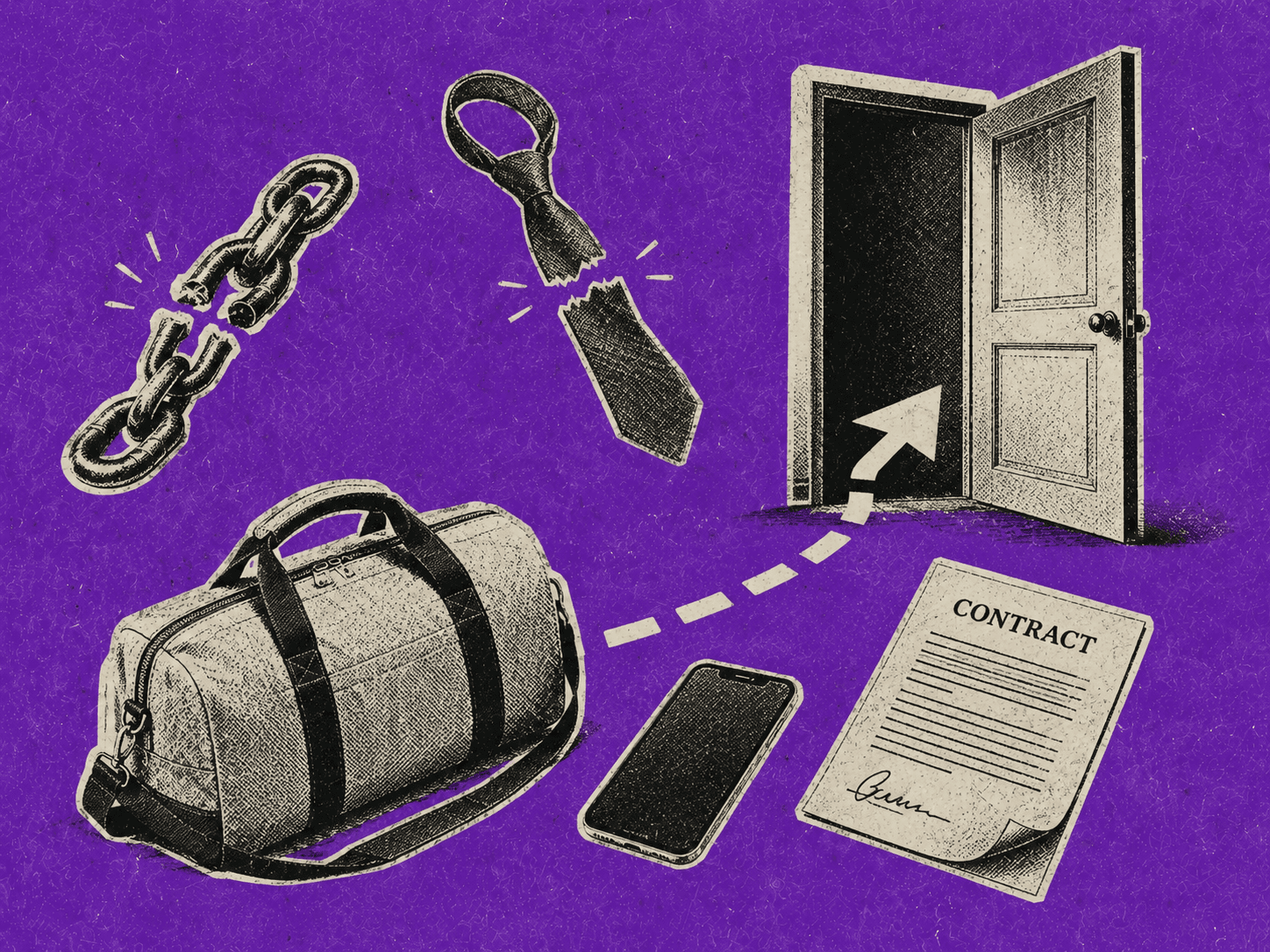
Most predatory agencies look the same on paper
The agencies that take advantage of creators don't advertise as predatory. They have nice websites. They have testimonials. They have founders who post hype content on LinkedIn. The damage shows up six months later when you try to leave.
The lawsuits against agencies like Unruly made this public. Creators alleged six-figure penalties for breaking contracts. Nude content published without consent. Workers misclassified as contractors. Major outlets covered it. The agency looked legitimate on the surface. The contracts were the trap.
This is not unique to one agency. The pattern repeats across the industry. Here are the red flags every creator should look for before signing anything.
Six-figure exit penalties
If your contract has a clause that says you owe the agency a specific dollar amount if you terminate early, walk away. The number can be five figures, six figures, sometimes higher. The amount itself is not the issue. The amount is meant to scare you into staying even if the relationship is failing.
A fair agency does not need exit penalties. If they're delivering value, you'll stay. If they're not, you should be able to leave. Lock-in clauses tell you the agency expects to lose you and is pricing in retention through fear.
At Rain Network, our agreements are month to month with 30 days notice. If we stop delivering, you walk. That's the deal.
Long-term contracts that compound the trap
Some agencies pair the exit penalty with a multi-year commitment. Three years is common. Five years is not unheard of.
There is no business reason for a creator to sign a multi-year commitment to an agency they just met. The industry moves too fast. Your goals will change. Your audience will change. The agency's team will change. A long-term contract is just an exit penalty with a calendar attached.
If anyone shows you a contract longer than 12 months, ask why. The answer will tell you everything.
They hold your platform passwords and accounts
A lot of management agencies operate your accounts by holding the login credentials. Your TikTok password. Your subscription platform password. Your email. Your two-factor authentication.
This sounds convenient. It's actually leverage. If the relationship goes bad, you don't have access to your own business. Some creators have had to go to court to recover their own accounts.
A real agency operates accounts through proper team-access features. TikTok, Instagram, and most subscription platforms support multiple users without sharing passwords. If your agency insists on holding your credentials directly, ask why. Push for proper access setup.
Late or missed payments
The clearest sign of a bad agency is what happens with money. Real agencies pay on a predictable schedule. The first of the month, the fifteenth, every Friday, whatever the agreement says. Consistent. On time.
Predatory agencies pay late. They make excuses. They blame the platform. They blame their accountant. They delay by days, then weeks, then they're a month behind.
If you ever have to chase payments, the agency is signaling that your money is being used to fund their cash flow. Run.
Vague reporting or no reporting
You should be getting a detailed monthly report. Revenue breakdown. Top performing content. Audience growth. Platform-by-platform analysis. Strategy for the next month.
If your agency sends you a screenshot of one number once a month and calls it a report, that's not reporting. That's hiding. If they refuse to send reports at all, you're funding a black box.
Real agencies are excited to show you the work. The numbers are how they prove value. An agency that avoids the numbers is an agency that doesn't have any good ones.
Content control without explicit consent
Some agencies post content on your behalf without showing it to you first. Sometimes that content includes nudity, suggestive material, or messaging you would not have approved.
In multiple recent industry lawsuits, creators alleged agencies published explicit content of them without consent. Even after contracts were terminated, agencies continued posting from accounts they still controlled.
Every piece of content that goes out under your name should require your sign-off. Not after the fact. Before. Your contract should explicitly say this.
Worker misclassification (this affects you too)
Some agencies classify their internal team, including chat operators and content managers, as independent contractors when they should be employees. This isn't just an internal HR issue. It's a sign of how the agency views compliance.
An agency willing to misclassify their own workers is an agency willing to bend other rules. Watch for the broader pattern.
The pitch that sounds too good
If an agency promises you specific results in a specific timeline, especially something like "we'll get you to a million followers in six months" or "you'll be making six figures by month three," they're either lying or about to be sued.
Real agencies talk about systems, processes, and ranges. They show you their past work. They don't make promises they can't substantiate. The FTC has gone after agencies for guaranteed-result claims and the lawsuits have been ugly.
The right pitch sounds like this: "Here's our system. Here's what's worked for creators in your niche. Here's what we think we can do for you. No guarantees. Results depend on the work."
What a fair agreement actually looks like
A clean management agreement should include: month to month with reasonable notice (30 days standard). Revenue share with no upfront fees (you pay nothing if you make nothing). Clear scope of what services are included. Content approval workflow (you sign off before anything posts). Account access via proper team features (you keep your passwords). Predictable payment schedule (specific dates each month). Transparent reporting (real numbers, every month). Mutual confidentiality (they protect your info, you protect theirs). Easy exit (no penalties for leaving).
If a contract doesn't include all of these, you should be cautious. If it explicitly does the opposite of any of these, you should walk.
Trust your instincts
Before you sign anything, sit with it for at least 24 hours. Read every clause. Ask questions. If you don't understand something, get a lawyer to look at it. An hour with an entertainment attorney costs a few hundred dollars and can save you years of pain.
Above all, trust your gut. If the pitch feels off, it is. If the founder is dodgy when you ask hard questions, that's the answer. If the contract is longer than the conversation, something is wrong.
The right agency wants you to be informed. They have nothing to hide. They will give you time. They will answer questions. They will let you take the contract to a lawyer.
The wrong agency rushes you. They pressure you. They have you sign at the end of the first call. That pressure is the entire warning you need.
At Rain Network, every creator we sign gets the contract in advance, a transparent conversation, time to think, and the freedom to walk if it isn't the right fit. That's the only way it should work. Anything else should make you walk away.